Quick Inquiry

Compensation Calculator

Coverage

Expert labor attorneys providing the highest level of service through a systematic system.

Coverage

  • Musculoskeletal

  • Lung Disease

  • Work-related Cancer

  • Cardiovascular·Overwork

  • Hearing Loss

  • Pneumoconiosis

  • Suicide and Mental Disorders

  • Seafarer's Accident

Musculoskeletal Disorders

What are Occupational musculoskeletal disorders?
  • Occupational musculoskeletal disorders refer to conditions that cause pain or functional degradation in muscles, ligaments, tendons, intervertebral discs, cartilage, bones, or related nerves and blood vessels in specific body parts (shoulders, arms, hands, neck, back, waist, legs, feet, etc.) due to occupational risk factors(works that put strain on the body).
What are musculoskeletal disorders?
  • Musculoskeletal disorders refer to occupational diseases resulting from performance of works that put strain on body. Proving causal relationship with job exposure will increase the eligibility for compensation. Among the most typical musculoskeletal disorders are included rotator cuff tears, lumbar and cervical herniated intervertebral disc and spinal stenosis, carpal tunnel syndrome, meniscal tears, and osteoarthritis of knee.
Key Considerations for Musculoskeletal Disease Workers' Compensation Claims
  • Confirmation of Diagnosis Name

    • To apply for workers' compensation for musculoskeletal diseases, the diagnosis must first be specified. This involves confirming the exact condition through MRI or X-ray imaging, and based on the results, obtaining a medical opinion for treatment benefits and a medical certificate from your attending physician. Since the claim procedure may vary depending on whether the cause is traumatic or degenerative, confirming the diagnosis is the essential first step in the application process.
  • Proximate Causation Between Work and Injury

    • Musculoskeletal diseases are often degenerative conditions caused by long-term physical strain at work. Therefore, it is necessary to prove the correlation based on objective data, such as the duration of employment, the degree of physical burden (the volume and intensity of work), specific work postures, and the weight of handled objects.
  • Key Occupational Factors Contributing to Musculoskeletal Diseases

    • Repetitive Motion Tasks
    • Excessive Force Tasks
    • Awkward Posture Tasks
    • Vibration Work
    • Prolonged Working Hours
Key Points for Musculoskeletal Disease Claims
  • Q.

    Can I receive compensation even if I have worked at multiple jobs, including daily labor?

    A.

    Yes, you are eligible. You can receive industrial accident compensation for the damage caused by musculoskeletal disorders if you have performed similar tasks continuously,
    no matter how many worksites you have worked at.

  • Q.

    Am I also eligible for industrial accident compensation even after I retire?

    A.

    Yes, you are. You do not have to be currently employed to be eligible for industrial accident compensation. However, if you retired a long time ago,
    the causal relationship with job exposure may be weakened. So, we recommend that you should consult a certified public labor attorney(CPLA) on that aspect.

  • Q.

    According to hospitals, I cannot file for occupational disease when the diseases are degenerative types.
    Can degenerative diseases be covered by industrial accident compensation?

    A.

    Yes, they are covered by the compensation. Even typical degenerative diseases, such as stenosis or degenerative arthritis,
    can be covered by industrial accident compensation if the relationship is clearly established with aforesaid types of tasks putting strain on the body.

Keyword for recognition of occupational disease related to musculoskeletal disorders
  • For recognition of occupational disease related to musculoskeletal disorders, claimants should specify and prove
    the postures during works, period of employment, extent of strain on body during works. Particularly for musculoskeletal disorders
    which mostly fall under degenerative diseases, you are eligible for compensation if you prove work-related strain accelerated natural progression.

Lung cancer and lung diseases

What are the representative types of occupational cancer?
  • Lung Cancer

    • Various causes, including smoking, are involved in the development of lung cancer, and it is known that approximately 10% of all lung cancer cases are caused by occupational factors.
      Major tasks includewelding, plating, painting, shot blasting, finishing, working in foundries using casting sand, stone processing, and underground work.
  • Leukemia

    • It is generally accepted that the latency period for leukemia is shorter than that of solid cancers; surveys of atomic bomb survivors showed that the peak risk for acute leukemia was 2 to 5 years post-exposure.
      Relevant processes includeexposure to ionizing radiation, dry cleaning, rubber product manufacturing, sterilization of medical devices, painting in MDF processes, and coke manufacturing.
  • Malignant Mesothelioma

    • A tumor occurring in the pleura or peritoneum, with about 90% occurring in the pleura. In the case of malignant mesothelioma, 70–90% is caused by asbestos.
      The average latency period is 30–50 years, which is longer than that of lung cancer. Therefore, for malignant mesothelioma, confirming asbestos exposure and histopathological diagnosis
      is more important than estimated exposure. In addition to asbestos, erionite is also a carcinogenic factor with sufficient epidemiological evidence for the
      occurrence of malignant mesothelioma, and it is known that sufficient epidemiological evidence also exists for painters and welders.
  • In addition, the Industrial Accident Compensation Insurance Act recognizes laryngeal cancer, ovarian cancer, sinonasal cancer, skin cancer, bladder cancer, liver cancer,
    colorectal cancer, stomach cancer, and breast cancer as occupational cancers.
    (Article 34, Paragraph 3, [Annex 3] of the Enforcement Decree of the Industrial Accident Compensation Insurance Act)

What are the criteria for recognition?
  • What are the principles for evaluating occupational relevance?

    • The cancer must not be a metastasized cancer or a secondary cancer caused by other treatments.
    • Exposure to substances recognized as carcinogens by the International Agency for Research on Cancer (IARC) or
      substances meeting the recognition criteria under the Enforcement Decree of the Industrial Accident Compensation Insurance Act.
    • However, considering that occupational cancer is related to various substances and takes a significant amount of time to be identified as a carcinogenic factor,
      even if it does not meet the recognition criteria, the determination of whether it is an occupational disease is made on a case-by-case basis through expert investigation.
  • Latency Period

    • A significant amount of time elapses from the initial exposure to carcinogens to the onset of the disease.
How do you apply for occupational cancer, and what is the procedure?
  • Application

    • Submit the documents for the industrial accident claim (Application for Medical Care Benefits + Medical Opinion) to the branch office with jurisdiction over the workplace.
  • Special Medical Examination

    • A special medical examination may be conducted to confirm the specific diagnosis.
  • Occupational History Investigation

    • Since the most important factor in determining the occupational relevance of occupational cancer is the possibility of exposure to harmful factors that cause occupational cancer during work, all occupational history from the start of economic activity to the present is investigated. The occupational history is confirmed through the statements of the applicant and fellow workers, but if it differs from the opinion of the policyholder, the facts are confirmed through field investigations, etc.
  • Request for Consultation and Judgment on Occupational Diseases to Advisory Bodies

    • The affiliated organization requests consultation on occupational diseases and a judgment from the advisory body to the Korea Workers' Compensation & Welfare Service Headquarters (Occupational Disease Department). According to the response from the headquarters, it commissions a professional investigation regarding the occupational disease to the Research Institute of Occupational Lung Diseases or the Korea Occupational Safety and Health Agency (KOSHA).
    • Request for Deliberation by the Occupational Disease Adjudication Committee and Decision by the Affiliated Organization
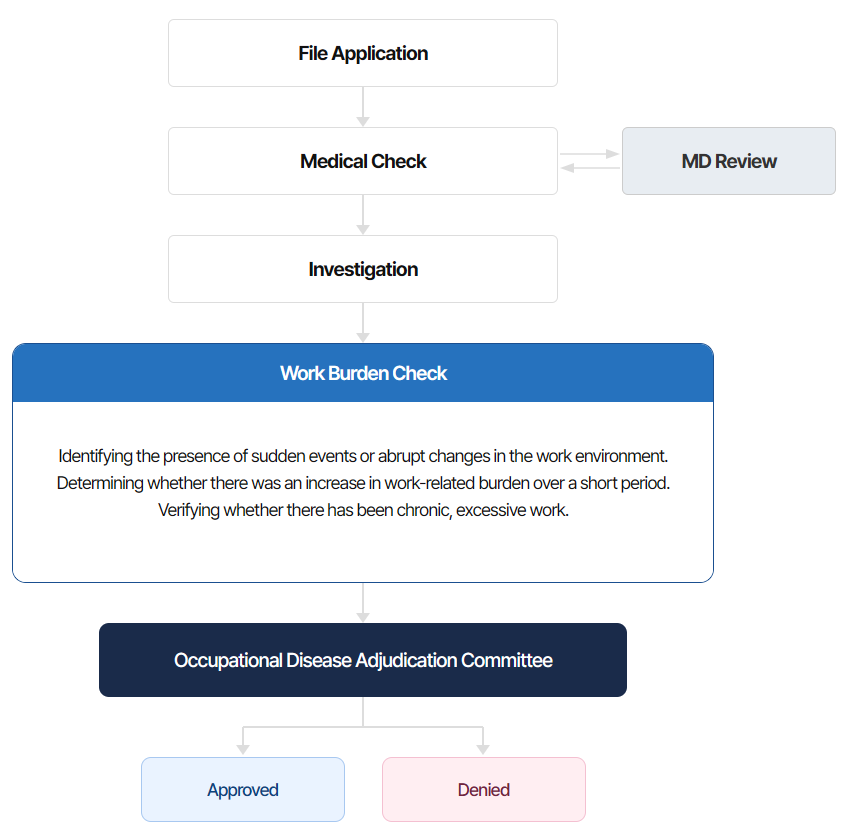
  • After preparing the investigation data and attaching relevant materials, the Occupational Disease Adjudication Committee determines whether there is a connection to the work. Subsequently, the affiliated organization decides whether to approve or disapprove based on the deliberation results of the Occupational Disease Adjudication Committee and notifies the applicant.

Occupational Cancer (Leukemia)

What is occupational cancer(Leukemia)?
  • The bones in human body maintain body shape, enable movement, and are involved in calcium regulation. Inside the bones, there is a tissue called 'bone marrow', which is less dense than bone; this tissue is responsible for producing blood cells such as white blood cells, red blood cells, and platelets. Leukemia is a cancer developing in white blood cells.
    Abnormal white blood cells(leukemia cells) proliferate excessively, inhibiting the production of normal white blood cells, red blood cells, and platelets.
    A decrease in normal white blood cell count will lead to immunosuppression, a risk factor for sepsis stemming from bacterial infections.
    A decrease in red blood cells causes symptoms of anemia(dizziness, headache, shortness of breath), while a decrease in platelets leads to a tendency to bleed.
    Additionally, the excessively proliferated leukemia cells themselves can cause high fever, fatigue, bone pain, diarrhea, decreased consciousness, shortness of breath, and a tendency to bleed.
    Leukemia is classified into acute leukemia and chronic leukemia, depending on the degree of cell differentiation, i.e. the pace of deterioration.
    By the origin of cell, leukemia is divided into myeloid leukemia and lymphoblastic leukemia. Leukemia commonly falls under the following 4 types.
  • Acute myeloid leukemia
  • Acute lymphocytic leukemia
  • Chronic myeloid leukemia
  • Chronic lymphocytic leukemia

Occupational Cancer (Mesothelioma)

What is occupational cancer (mesothelioma)?
  • Mesothelioma occurs primarily in the mesothelium covering the surfaces of the pleura surrounding the lungs, the peritoneum protecting the stomach or liver, and the pericardium surrounding the heart. Types include pleural mesothelioma, peritoneal mesothelioma, and pericardium mesothelioma, which can be categorized into benign and malignant types.
    All benign mesotheliomas are localized, and malignant mesotheliomas can be localized to form a mass in one spot or diffuse in such a way that it seems to permeate along the pleura or peritoneum as it grows. Malignant cases are rare but have a poor prognosis, and the majority of their causes are known to be influenced by asbestos.
    Approximately 80% of malignant mesotheliomas are caused by exposure to asbestos dust, but it is a very rare tumor originating from pleural and peritoneal cells, having little to do with asbestos-induced pulmonary fibrosis. Asbestos exposure levels are relatively low, and the latency period before the onset of disease spans between 30 and 40 years.
    Clinical symptoms usually include chest pain, shortness of breath, fatigue, loss of appetite, loss of weight, and other related signs that require careful medical attention and diagnosis from professional specialists to ensure proper care and treatment for the patient's well-being.
  • What is Occupational Cancer?

    • Occupational cancer refers to cancer that develops after being occupationally exposed to carcinogens and passing a certain latency period, or cancer that occurs after being engaged for a significant period in a specific occupational group, industry, or task known to have a high incidence of cancer, even if a clear carcinogen has not been identified to date.
  • What are the characteristics?

    • Hematopoietic cancers can occur within as little as one year, but solid cancers require 10 years or more, and in the case of mesothelioma caused by asbestos, the latency period is generally even longer. (However, the latency period is not an absolute standard and may vary depending on exposure levels, exposure patterns, etc.)
    • In general, the incidence or mortality rate of specific cancers is higher in groups exposed to carcinogens compared to the general population.

Overwork-Related Diseases

Overwork-Related Diseases and Occupational Accidents
  • Excessive labor acts as a factor that aggravates hypertension and arteriosclerosis, inducing cerebrovascular diseases such as cerebral hemorrhage, subarachnoid hemorrhage, and cerebral infarction, as well as ischemic diseases like myocardial infarction and acute cardiac arrest. This disrupts a worker’s normal rhythm of labor and life, resulting in the accumulation of fatigue within the biological system and a transition into a state of overwork.
    Consequently, pre-existing hypertension or arteriosclerosis worsens, leading to death or the occurrence of disabilities such as paralysis of parts of the body, all of which are collectively referred to as "overwork-related diseases." Since these overwork-related diseases can be caused by the intensification of labor, long working hours, mental tension, and pre-existing conditions, one must examine the relevance of the causation.
    The examination of the relevance between the overwork-related disease and the work is a mandatory step to qualify as an occupational accident under the Industrial Accident Compensation Insurance Act. It involves a comprehensive review of the worker's duties, the specific stressors present in the workplace, and how these factors interacted with any existing health issues to cause the current medical emergency or disability.
    This thorough investigative process ensures that workers who have suffered due to the physical and mental demands of their employment receive the necessary support and compensation they are legally entitled to. By carefully analyzing the link between labor and health, the system aims to protect the well-being of the workforce and promote a safer, more sustainable working environment for all individuals across various industries.
  • Overwork-Related Diseases

  • Cerebrovascular Diseases

  • Heart Diseases

What are Overwork-Related Diseases?
  • It refers to cerebrovascular and cardiovascular diseases caused by excessive work or mental and physical stress based on working hours. Because these overwork-related diseases are the result of various variables such as changes in labor intensity, long working hours, mental stress, and pre-existing conditions, you must consult a certified labor attorney specializing in industrial accidents to determine whether they qualify as occupational accidents under the Industrial Accident Compensation Insurance Act.
Considerations for Filing Industrial Accident Claims for Overwork-Related Diseases
  • Confirmation of the Diagnosis

    • Confirmation of disease name: Accurate name of disease is needed for recognition of overwork-related diseases. For that, it is necessary to find accurate name of disease in the Medical Opinion for Industrial Accident Compensation, and if necessary, death certificates and autopsy report, etc. However, if it is difficult to confirm the name of disease or cause of death, you may file for occupational disease based on estimation if the data that provides basis for estimation (autopsy records, copies of medical records, etc.) is available. Article 34, Paragraph 3 [Appendix 3] of the Enforcement Decree of the Industrial Accident Compensation Insurance Act specifies intracerebral hemorrhage, subarachnoid hemorrhage, cerebral infarction, myocardial infarction, dissecting aortic aneurysm, etc. However, cerebrovascular and heart diseases not specified in the Enforcement Decree may also naturally fall under occupational diseases if substantial causal relationship with the work is recognized.
  • Substantial Causal Relationship Between the Disease and Work

    • It should be established that the overwork-related disease in question is occupational, proving significant causal relationship between the disease and work. While overwork-related diseases usually show natural progressive changes characterized by slow progression and deterioration. However, overwork-related diseases can be recognized as occupational if work-related strains can be proven despite pre-existing conditions, given the 'principle of estimation' highlighted in recent precedents and the 'principle of liability without negligence(no-fault liability)' under the industrial accident compensation insurance.
  • Verification of Pre-existing Condition

    • In the case of overwork-related diseases, pre-existing conditions attributable to lifestyle habits such as smoking, drinking, exercise, and obesity, often deteriorate slowly after their onset. Therefore, it is necessary to ascertain and cope with such tendency and prove work-related strains.
Specific Criteria for Recognition of Overwork
(Referencing Ministry of Employment and Labor Notice No. 2017-117 and Guidelines for Investigation and Adjudication of Cerebrovascular and Cardiovascular Occupational Diseases)
  • Overwork is largely categorized into Sudden Overwork (sudden events or changes in the work environment within 24 hours prior to the onset of symptoms), Short-term Overwork (rapid increase in work intensity and volume one week before onset), and Chronic Overwork (total overwork for 12 weeks prior to onset).
  • Sudden Overwork

    • It refers to cases where cerebrovascular or cardiovascular lesions, etc., have rapidly and obviously worsened beyond their natural course due to the occurrence of sudden and unpredictable work-related events or rapid changes in work environment within 24 hours prior to onset of disease.
    • Example) such as the cases of traffic accidents caused by taxi drivers, disputes between security guards and residents, changes in the workload of production workers, etc.
  • Short-term Overwork

    • Cases where the workload or working hours increased by more than 30% compared to ordinary duties within one week prior to the onset of the disease, or where the intensity of work, level of responsibility, or work environment changed to a degree that even workers performing similar duties would find difficult to adapt to. Whether the worker’s duties constitute “short-term work-related burden” is determined comprehensively by considering workload, working hours, work intensity, responsibility, holidays and leave, changes in work type and environment, adaptation period, as well as the worker’s age, gender, and health condition.
    • Example) Snow removal duties assigned to security guards that were not part of their usual work, or changes in production volume due to delivery deadlines.
  • Chronic Overwork

    • This refers to a state where work factors recognized as having caused continuous and excessive physical and mental burdens for more than 3 months prior to onset are objectively confirmed. Whether the work qualifies as "chronic excessive work" is determined by comprehensively considering work volume, hours, intensity, responsibility, time off, work patterns (shifts, night work), degree of mental tension, sleep time, work environment, and the worker’s age, gender, and health status, while taking the following regarding working hours into account:
    • If the average working hours per week over the 12 weeks prior to onset exceed 60 hours: There is a strong correlation between work and the disease.
    • If the average working hours per week over the 12 weeks prior to onset exceed 52 hours: The work-relatedness increases, and the correlation is strong if "workload aggravation factors" are present.
    • If working hours do not exceed 52 hours: The correlation increases if there is complex exposure to "workload aggravation factors." For night work between 10 PM and 6 AM, 30% is added to the actual hours.
Key Keywords for Approval of Overwork-Related Claims
  • For the approval of overwork-related disease claims, the claimant must assert and prove the aforementioned considerations and specific criteria for overwork. This requires meticulous preparation starting from the data collection stage, and we highly recommend seeking the assistance of a certified labor attorney specializing in industrial accidents.
COMWEL Adjudication Procedure

Swipe to view the full table.

Noise-Induced Hearing Loss

What is Noise-Induced Hearing Loss (NIHL)?
  • Noise-induced hearing loss is not simply hearing loss due to aging, but a type of sensorineural hearing loss commonly found in workers who have worked in loud environments for a long period.
Criteria for Recognition of Noise-Induced Hearing Loss as an Occupational Disease
  • Exposure to continuous noise of 85dB or higher for 3 years or more.

    • Meaning of ‘3 years or more’: A cumulative concept of noise work periods, totaling 3 years or more of noise exposure during the entire employment period.
  • Hearing loss in one ear must be 40dB or more.

  • Sensorineural Hearing Loss due to Inner Ear Lesions

    • Hearing loss is largely classified into sensorineural, conductive, and mixed types. Since noise-induced hearing loss must not have distinct lesions in the eardrum or middle ear, it is recognized only in cases of sensorineural hearing loss caused by inner ear lesions.
2020 Revised Principles for Determining Occupational Diseases
  • Even if the cause of hearing loss is a mixture of work-related and non-work-related factors, if the degree of noise exposure meets the criteria for recognition as an occupational disease and a clear non-work-related cause for the hearing loss cannot be proven, it can be recognized as an occupational disease.
  • Even if the hearing loss in one ear is 40dB or more but the degree of noise exposure does not meet the recognition criteria (continuous noise of 85dB or more for 3 years or more), it can be recognized as an occupational disease if there is a proximate causation between the noise-induced hearing loss and the work.
  • If the investigation results show that the hearing threshold of both ears is less than 40dB, or the degree of noise exposure during the period of exposure is less than 80dB, it will not be recognized as an occupational disease.
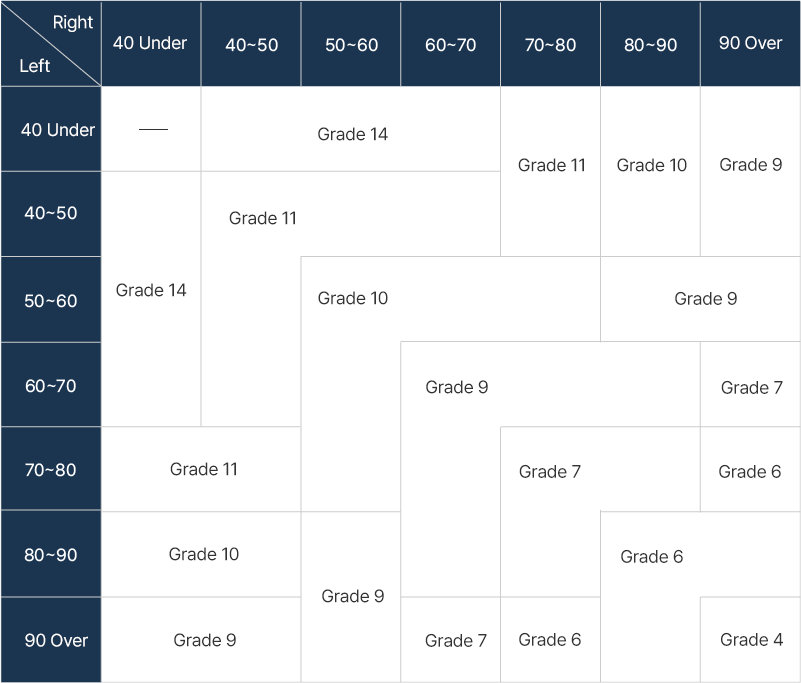
Compensation for Noise-Induced Hearing Loss

Swipe to view the full table.

Frequently Asked Questions (FAQ) about Hearing Loss
  • Q.

    Can I only be recognized for industrial accidents if I have worked at only one workplace?

    A.

    Even if you have moved between several workplaces, it is not a problem to be recognized for an industrial accident as long as you have been exposed to similar noise. However, the condition that the workplaces must be subject to the Industrial Accident Compensation Insurance Act must be met.

  • Q.

    Must I be currently employed for the accident to be recognized?

    A.

    Noise-induced hearing loss falls under the category of occupational diseases. In other words, since it appears due to the accumulation of noise, being retired does not mean you cannot be recognized for an industrial accident.

  • Q.

    Is it only possible for tasks that directly generate noise?

    A.

    The noise referred to in the hearing loss recognition requirements meets the criteria for noise-induced hearing loss if the noise generated at the site is 85dB (decibels) or higher, even if your actual task does not generate noise. For example, if you are a formwork carpenter but work next to tasks involving grinders or rock drills at a construction site.

  • Q.

    Does it also apply to sudden hearing loss?

    A.

    Hearing loss caused by a one-time loud blast or similar noise is considered sudden hearing loss. Unlike noise-induced hearing loss, which is an occupational disease, this must be processed as an occupational accident (accident-based).

Pneumoconioses

What is Pneumoconioses?
  • Pneumoconiosis refers to a disease in which microscopic dust particles, invisible to the eye, enter the lungs through the nose and bronchial tubes during breathing and accumulate, causing the lungs to harden and fail to function properly. In the struggle between the dust entering the lungs and the lung cells, the lungs eventually lose their original shape and harden like a callus, a condition known as 'Pulmonary Fibrosis.'
Eligibility for Application
  • Individuals who have worked for a long period in dust-generating environments such as coal mines or stone quarries, exposed to coal dust or stone powder, may be eligible to apply for a precise diagnosis of pneumoconiosis and medical care benefits. Those who did not receive a grade for pneumoconiosis or were diagnosed with suspected pneumoconiosis (suspicion of pneumoconiosis) may consider applying for compensation through Chronic Obstructive Pulmonary Disease (COPD) or Interstitial Lung Disease.
Recognition Criteria
  • Pneumoconiosis is determined through a precise diagnosis by the COMWEL. The type of pneumoconiosis is assessed via chest X-ray, while cardiopulmonary impairment is judged by synthesizing cardiopulmonary function indices such as ventilation reserve ratio and maximum voluntary ventilation, along with other findings (arterial blood oxygen partial pressure and saturation, cardiac dysfunction, etc.), the degree of dyspnea, and pre-existing conditions.
Adjudication Criteria for the Type of Pneumoconiosis
  • Adjudication Criteria for Pneumoconiosis Type and Degree of Cardiopulmonary Function

Swipe to view the full table.

Type X-ray Findings
Suspicious 0/1 The density of small rounded or irregular opacities in both lungs is lower than the lower limit of Type 1.
Type 1 1/0 A small number of small rounded or irregular opacities in both lungs, with no large opacities recognized.
1/1
1/2
Type 2 2/1 Many small rounded or irregular opacities in both lungs, with no large opacities recognized.
2/2
2/3
Type 3 3/1 A very large number of small rounded or irregular opacities in both lungs, with no large opacities recognized.
3/3
3/+
Type 4 A Cases where large opacities are recognized.
B
C
Criteria for Degree of Cardiopulmonary Function
  • Adjudication Criteria for Pneumoconiosis Type and Degree of Cardiopulmonary Function

Swipe to view the full table.

Criteria for Degree of Cardiopulmonary Function X-ray Findings
Severe Impairment
(F3)
Cases where FVC or FEV1 is less than 45% of the predicted normal value.
(For FEV1, it must be less than 70% of FVC. The same applies hereafter in this item.)
Moderate Impairment
(F2)
Cases where FVC or FEV1 is 45% or more and less than 55% of the predicted normal value.
Mild Impairment
(F1)
Cases where FVC or FEV1 is 55% or more and less than 70% of the predicted normal value.
Slight Impairment
(F1)
Cases where FVC (Forced Vital Capacity) or FEV1 (Forced Expiratory Volume in 1 second) is 70% or more and less than 80% of the predicted normal value.
Pneumoconiosis Grade Diagnosis

Swipe to view the full table.

Cardiopulmonary Function Classification Normal(F0) Slight(F1/2) Mild(F1) Moderate-Mild(F2)
Small Op. Type 1 1/0, 1/1, 1/2 Grade 13 Grade 11 Grade 7 Grade 3
Type 2 2/1, 2/2, 2/3 Grade 11 Grade 9 Grade 7 Grade 3
Type 3 3/2, 3/3, 3/+ Grade 1 Grade 9 Grade 7 Grade 3
Large Op. Type 4 4A, B, C Grade 11 Grade 9 Grade 5 Grade 3
4C 1/2 ↑ ※ Regarding medical care, 4C and 1/2 are unrelated to cardiopulmonary function.
Types of Complications Eligible for Medical Care
  • The scope of complications specified in the current Pneumoconiosis Act and the Occupational Accident Compensation Insurance Act is limited to the following nine types.
  • Active Pulmonary
    Tuberculosis

  • Bronchitis

  • Bronchiectasis

  • Pneumothorax

  • Pleurisy

  • Emphysema

  • Cor Pulmonale

  • Primary Lung Cancer

  • Mycobacterial Infection

COPD

Eligibility for Chronic Obstructive Pulmonary Disease (COPD) Application
  • Individuals who have been engaged in dust-generating work for a long period and have undergone annual precise diagnoses for pneumoconiosis, but did not receive a grade or were diagnosed with suspected pneumoconiosis, may apply for compensation through COPD.
Recognition of COPD as an Occupational Disease
  • To be recognized as an occupational disease, there must be airflow limitation where, after the administration of a short-acting bronchodilator in a spirometry test, the FEV1/FVC ratio is less than 70% and the FEV1 is less than 80% of the predicted normal value.
    However, even if these medical results are obtained from a pulmonary function test, it does not immediately guarantee recognition as an industrial accident. Therefore, the following requirements must be met.
  • You must have a history of handling or being exposed to dust substances during the performance of your duties.
  • It must be occupationally and environmentally recognized that chronic obstructive pulmonary disease (COPD) could be induced based on the time, duration, and degree of exposure to dust substances.
  • Medical causation must be supported to receive industrial accident compensation. It is more important than anything else to track the patient's occupational history through direct and indirect investigations and to receive help from industrial accident experts through literature reviews of past work environments, related data research, epidemiological investigations, and work-relatedness evaluations by occupational and environmental medicine specialists.
Compensation for COPD
  • Chronic Obstructive Pulmonary Disease (COPD) is classified into three grades (Grade 3, Grade 7, and Grade 11) based on the degree of cardiopulmonary function in accordance with the Industrial Accident Compensation Insurance Act.

Swipe to view the full table.

Disability Grade Compensation Amount
(Average Wage x Number of Compensation
Days for the Corresponding Grade)
Degree of Pulmonary Function Impairment in
Chronic Obstructive Pulmonary Disease (COPD)
Grade 3, No. 4 Average Wage x 1,155 days FEV1: 30% or more and less than 55%
Grade 7, No. 5 Average Wage x 616 days FEV1: 55% or more and less than 70%
Grade 11, No. 11 Average Wage x 220 days FEV1: 70% or more and less than 80%

Suicide and Mental Disorders

What is Suicide and Mental Disorders?
  • Article 37, Paragraph 2 of the Industrial Accident Compensation Insurance Act stipulates that 'injuries, diseases, disabilities, or deaths caused by a worker's intentional act, self-harm, or criminal act, or as a result thereof, shall not be regarded as occupational accidents.' Therefore, in principle, suicide cannot be recognized under industrial accident insurance.
  • However, if the injury, disease, disability, or death is an act committed in a state where normal cognitive abilities, etc., have clearly deteriorated, it may be recognized as an industrial accident in the following cases
  • When a person who has received or is receiving treatment for mental illness caused by occupational reasons commits an act of self-harm while in a state of mental abnormality
  • When a person receiving medical treatment for occupational disease commits an act of self-harm while in a state of mental abnormality caused by that occupational disease
  • In other cases where it is medically recognized that an act of self-harm was committed while in a state of mental abnormality caused by occupational reasons
  • [Article 36 of the Enforcement Decree of the Industrial Accident Compensation Insurance Act]
Key point for recognition of occupational diseases
  • Proving occupational stress factors and severity

    • You should prove the occupational stressors that you have been subject to in connection with occupational disease and severity of such stress.
      Major work-related stressors include serious work-related accidents, verbal abuse, violence, sexual harassment, bullying, discrimination; changes in the quantity and quality of work; conflicts with superiors, colleagues, and subordinates, complaints, and conflicts with customers.
  • Identifying non-work stressors and personal characteristics

    • You need to identify personal stressors or characteristics unrelated to work.
      For example, factors such as breakup with lover, serious illness, injury, or death within family, financial matters, and interpersonal relationship must be examined to determine the causal relationship between occupational diseases and non-occupational stress.
  • Proof of a history of mental illness treatment and abnormal mental state

    • As comprehensive investigation is needed to ascertain the victim’s abnormal mental state leading to suicide, it is necessary to prove past medical history, medical conditions, behavioral and psychological changes.
Cases recognized as work-related suicide
  • A worker who committed suicide was recognized as having suffered from occupational disease in the course of treatment of severe pain, bowel/urinary dysfunction, and depression in the wake of recognition of occupational disease following his fall from a ladder.
  • In a case where a worker, who committed suicide at workplace due to the sales performance and works weighing heavily on him after his appointment as bank branch manager, was recognized as having suffered from occupational disease, given that he killed himself while the depression impaired his normal cognitive capacity or his ability to make reasonable judgment.

Fisherman accidents

What are fisherman accidents?
  • [Fisherman and Fishing Vessel Accident Compensation Insurance Act] This is an insurance that provides compensation for damage, such as injury, disease, physical disability or death, caused to fishermen engaging in fishing industry in connection with fishing activities pursuant to the Fisherman and Fishing Vessel Accident Compensation Insurance Act.
Scope of application
  • Fishing vessels licensed for deep-sea fishing pursuant to Paragraph 1, Article 6 of the Distant Water Fisheries Development Act
  • Fishing vessels engaged in the transportation of fishery products pursuant to , Paragraph 2, Article 24 of the Maritime Shipping Act
  • Other types of fishing vessels designated by Presidential Decree in view of the vessel’s size, number of crew members, risk rate, fishing grounds, etc., with a gross tonnage of less than 5 tons and cases where only family members are on board
Insurance Benefit

Swipe to view the full table.

Type Reason Details of Benefit
Occupational Non-occupational
Medical Care Benefits In case of injury or disease occurred during or outside of official duties Full amount of medical care expenses Medical care expenses for up to
3 months(However, not paid in cases of
intentional acts or gross negligence)
Sickness Benefits In cases where workers are receiving medical care due to occupational
or non-occupational injury or diseases
Within 4 months: Ordinary wage 70% of ordinary wage
for up to 3 months only
(However, not paid in cases of
intentional acts or gross negligence)
After 4 months: 70% of ordinary wage
Disability Benefits In case a disability remains even
afterrecovery from an occupational
injury or disease
Average onboard wage x Standards under the Industrial Accident Compensation Act X
Lump-sum Compensation Benefits If not recovered even after 2 years of
occupationalmedical care
(injury & disease) benefits
1,474 days of the onboard average wage X
Survivors' Benefits In case of death during or
outside of official duties
(including death during medical treatment)
1,300 days of onboard average wage 1,000 days of onboard average wage
(However, not paid in cases of intentional acts or gross negligence)
Funeral Expenses In case of death during or
outside of official duties
120 days of the onboard average wage 120 days of the onboard average wage
Missing Persons' Benefits In case the life or death of a
fisherman, etc., is unknown
1 month of ordinary wage and
3 months of onboard average wage
(After 1 month: Additional survivors' benefits and funeral expenses are paid)
1 month of ordinary wage and
3 months of onboard average wage
(After 1 month: Additional survivors' benefits and funeral expenses are paid)
Personal Effects
Loss Benefits
In case of loss of personal effects due to a fisherman's accident while onboard Equivalent value of the lost items
(Within the limit of 2 months
of ordinary wage)
Equivalent value of the lost items
(Within the limit of 2 months
of ordinary wage)

Commuting Accidents

What is a Commuting Accident?
  • It refers to an accident that occurs while a worker is commuting under employer's control and management,
    such as by using means of transportation provided by the employer or equivalent means of
    transportation(bus, subway, bicycle, etc.), or any other accident that occurs while commuting via usual route and method.
Key Points for recognition as occupational accident
  • Basically, the routes and method of commuting are determined by workers and not considered to be under the employer’s control and management,
    and therefore, in some cases, accidents occurring while commuting to and from work are not recognized as work-related.
    Therefore, key points for recognition of commuting accidents as occupational should be checked to increase the chances of recognition.
  • Is the act of commuting related to employment?
  • Was there any deviation from the routes or any disruption while commuting?
    At this time, deviation refers to the act of moving away from usual routes while commuting, and interruption refers to performing any act unrelated to commuting on the commuting routes.
Exception from deviation from routes and disruption
(Paragraph 2, Article 35 of the Enforcement Decree of the Industrial Accident Compensation Insurance Act)
  • The act of purchasing goods necessary for everyday life
  • The act of receiving education or training, etc., which may contribute to development and improvement of vocational ability
    at schools specified in Article 2 of the High Education Act or at vocational education and training institutes specified in Article 2 of the Vocational Training Promotion Act
  • The act of exercising the voting right or casting vote in national referendum
  • The act of bringing children or any person with disability actually under protection by the worker to or from child-care institutions or educational institutions
  • The act of receiving medical care to treat or prevent diseases at medical institutions or public health centers
  • The act of taking care of family members receiving medical care at medical institutions, who are in need of care by the worker
  • Any acts specified by Subparagraph 1 through Subparagraph 6, which the Minister of Employment and Labor considers necessary for everyday life